
Written By Carolus Plebejus
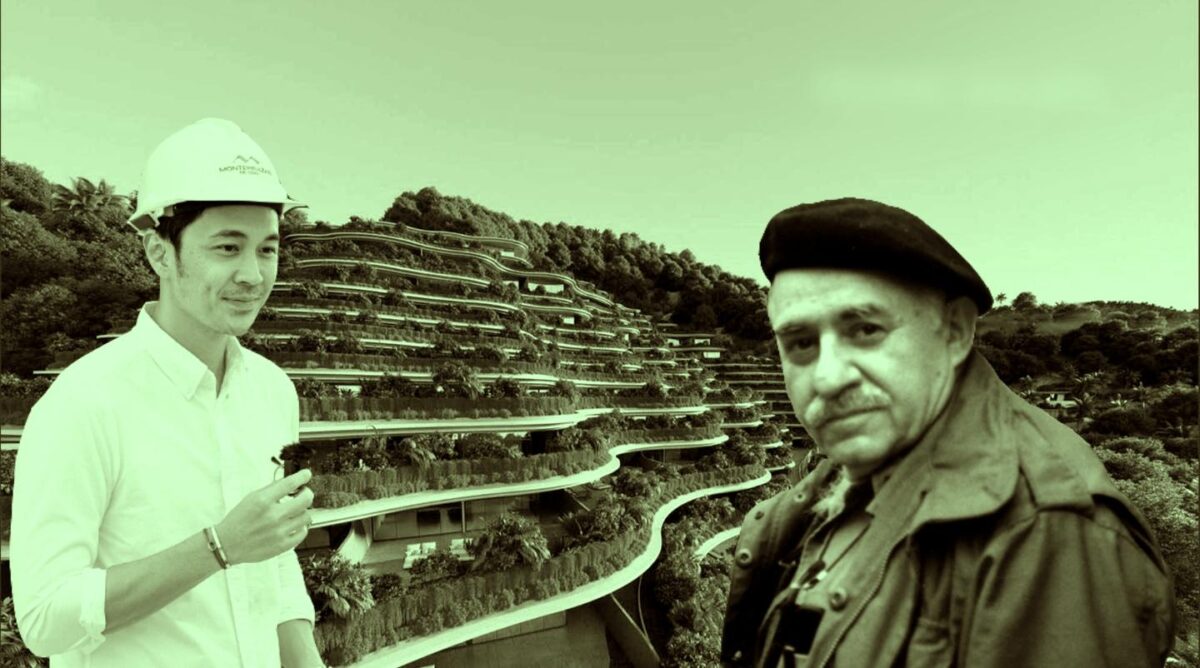
Jan Slater Lee Young, popularly known as “Slater Young”, is a Filipino Entrepreneur, and Engineer who dabs in acting, modeling, and “content creation.” He unveiled his new real estate development project — which he dubbed the Skypod 3.0 — in his YouTube Vlog. The said real estate project is to be built on a mountainside, taking inspiration from the Banaue Rice Terraces. Though aesthetically pleasing, and seemingly synergic with the environment — as marketed to be in-line with what the bourgeoisie calls as “green architecture”, it raises a lot of questions about the environmental impact of having to carve half a mountain just to accommodate the vanity of the rich.
Slater Young published his vlog unveiling the Skypod 3.0 of the Rise at Monterrazas de Cebu on August 24, 2023 on his YouTube channel, following a teaser dubbed as the “secret is out” published on his social media platforms such as Instagram, and Facebook.
In the said vlog, Slater Young shared “We wanted it to be architecturally forward, something that Cebu or the Philippines has never seen before. We wanted it to be not just maganda tingnan but very, very usable din and may added benefit to the user. And lastly because we are building on the mountain side, we want the project to be sustainable as possible,”
(…We wanted it to be not just aesthetic but also utilitarian with an added benefit to the user…)
It is presented as a concept scale model detailing how the condominium development would look once finished. But through an Instagram story posted by Doctor Hayden Kho, the construction of the project seems to have already begun through what seemed to be a cleared mountainside near another Monterrazas condominium development named “Monterrazas Prime Legato.”
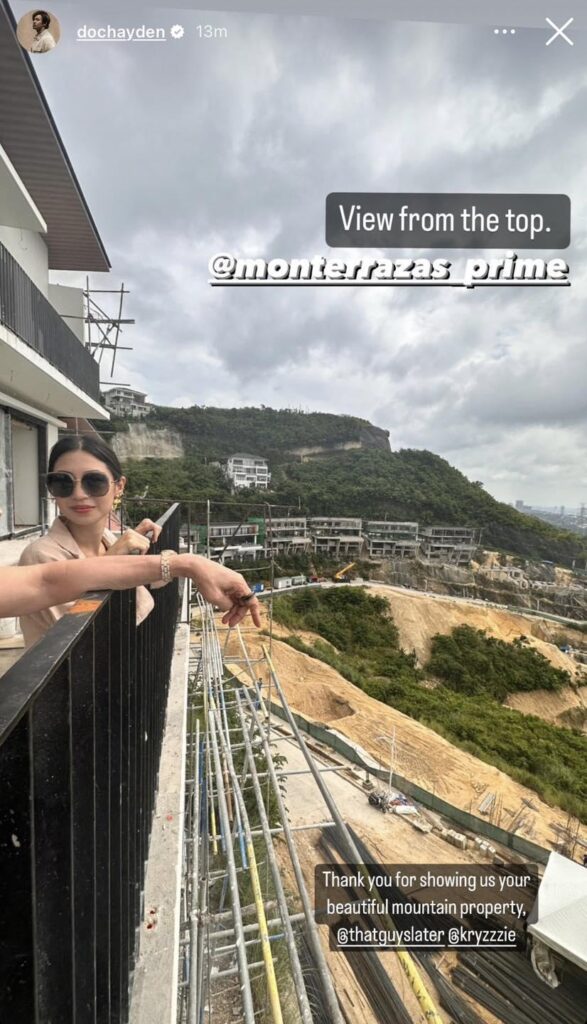
The cleared mountainside is already a preview of the environmental impact of such condominium development masqueraded as “environmental”, “sustainable”, and “organic.” The netizens and environmental groups have, of course, raced to various platforms initiating a public decry and discourse on the matter. Citing the ‘greenwashed’ irony that the project will most likely cause ecological disruption in Cebu City, which could potentially cause landslides and flooding in the city.
But what does Murray Bookchin have to say on this latest development fad from the elite?
The Dominance of Man over Nature
Murray Bookchin was the primary social theorist behind “Social Ecology”, a philosophical position described as an “appeal for social reconstruction along ecological lines.” His argument stems from an interdisciplinary approach drawing from Historical Anthropology, Biological Sciences, Sociology, and Dialectical Philosophy that leads to the assertion that “The domination of Human by Human led to the idea behind the domination of nature” (McGuire, 2019).
For Bookchin, many of our environmental woes are caused by social hierarchies, classes, and the contemporary competitive capitalist system where the natural world is viewed as a mere collection of “resources” ripe for exploitation for human production and consumption. This grounds environmental issues to be social and political in nature with roots deep in the historical legacies of domination and social hierarchy. A primary example of this case is the rapid expansion of real estate developments into the remaining untouched and pristine forests and mountains in the Philippine countryside.
Commodification of Nature Repackaged
Real Estate Developers such as Monterrazas de Cebu, and their engineers such as Slater Young — a millennial archetype of a rich and famous Filipino-Chinese — have the reputation of commodifying natural landscapes, especially in rural areas, for market gains while local labor is exploited with low wages and bad workplace environment to minimize operational costs and maximize profits.
What is more worrying is how “out-of-touch” these projects reveal the rich, such as Slater Young, to be. The marketing of the real estate development of Monterrazas de Cebu as a green synergic concept hides a nefarious reality where lush forests and mountains themselves must be excavated for the so-called “green paradise” of the elite.
After all, as advertised, Monterrazas prove to be high-value developments that only a few can afford to live on. All the while the rest suffer the consequences of having forests cut off, and mountains flattened, especially during seasons of heavy downpour in a country beset with 18-20 typhoons each year. On top of that, what seems to be an absence of community and transport amenities in the Skypod 3.0 design proves that future residents will have to use cars to access and get around the development, which will only lead to congestion and exclusivity.
It is quite ironic that ‘green architecture,’ which is designed to have ‘minimal environmental impacts,’ entails the concession of a chunk of a naturally-formed mountain and its lush vegetation in its realization. It does not take one to be an engineer or an architect to see how destructive the development is to the natural ecology of the area it now sits on. Perhaps it is more accurate to say that it is designed to be a glorified theme park, a zoo where the animals are the rich residents instead.
A Real Way Forward
The alteration or influence of nature by human cultural and technological development may not be avoidable after all. In Bookchin’s Dialectical Naturalism, this is what is referred to as “second nature” with “first nature” described as an “evolutionary and biological nature that includes humans.” Though second nature transcends first nature, the former retains (and should retain) everything in the latter. To put it in simpler terms, first nature embodies natural evolution while second nature is human society itself (McGuire, 2019).
Social ecology teaches that human society is an extension of nature, and should not be pitted against nature in any deterministic way. The capitalistic desires of real estate developers with their selfish goals to profit at nature’s expense is what Murray Bookchin calls irrational. There are others who would argue that selfishness is a human nature while interdependence and cooperation are an afterthought for self-advancement, these people are also seen as misguided. There is anthropological evidence that shows cooperation through mutual aid and empathy to be the driving mechanism for human evolution, and our continued existence (McGuire, 2019). This is seen very succinctly in times of distraught — one such example is the spontaneous set-up of community pantries throughout the Philippines, and some beyond, during the COVID-19 pandemic.
Though the contemporary societal set-up is exploitatively capitalistic and unsustainable — no matter how they rebrand or ‘greenwash’ it as compliant with sustainable development principles— there is still a glimmer of hope beyond doomed irrationality. We just have to move away from the vanity projects of the elite to something that doesn’t involve defacing a mountain. There are many alt-urbanist ideas that can be explored as an alternative, while community, inclusivity, and ecology are re-centered. Another accessible alternative is in-city housing developments around existing infrastructure and communities, which are not such a bad idea. Especially given how land values work that capitalists must have known already.
References
C, T. (2023, August 25). Slater Young unveils new real estate project inspired by the Banaue Rice Terraces. PUSH. https://push.abs-cbn.com/2023/8/25/slater-young-unveils-new-real-estate-project-inspired-by-the-banaue-rice-terraces-1043
McGuire, E. (2019). Social Ecology Pamphlet. Plainfield, Vermont; Institute for Social Ecology.
Monde, J. (2023, August 26). Slater Young new real estate project criticized, here’s why. PhilNews.ph. https://philnews.ph/2023/08/27/slater-young-new-real-estate-project-criticized-heres-why/